Put on your red shoes and dance the blues….
Dance shoes are an essential part of a ballroom dancer’s toolkit — delicate, specialized, and surprisingly fragile. Suede soles give the grip and glide we rely on, but they wear down quickly when exposed to pavement, gravel, or even gritty studio floors. That’s why a purpose-built dance bag matters: it protects your shoes, organizes your gear, and adds a little style to every trip to class, practice, or competition.
Why a regular bag isn’t enough
Suede soles are delicate: Outdoor surfaces scuff and pick up grit that shortens the life of your shoes and changes their feel.
Protection from clutter: Shoes with thin heels or shaped vamp need room to avoid being squashed in a crowded tote.
Quick access and organization: Dance life demands speed and order — shoes, shoe brushes, and a water bottle all have to be easy to find.
What makes a great dance bag
Shoe compartment: A dedicated, padded compartment keeps shoes separate and protects soles from direct contact with the outside world.
Ventilation: Breathable cotton fabrics help air out moisture and reduce odor between uses.
Accessible pockets: Quick pockets for sunglasses, lip gloss and accessories keep you ready in a hurry.
Comfortable straps: Grab handles or shoulder straps make carrying easier between classes or venues.
Style and personalization: Ballroom is elegant — your bag should reflect that. Color, pattern, and small details can match your personality and team colors.
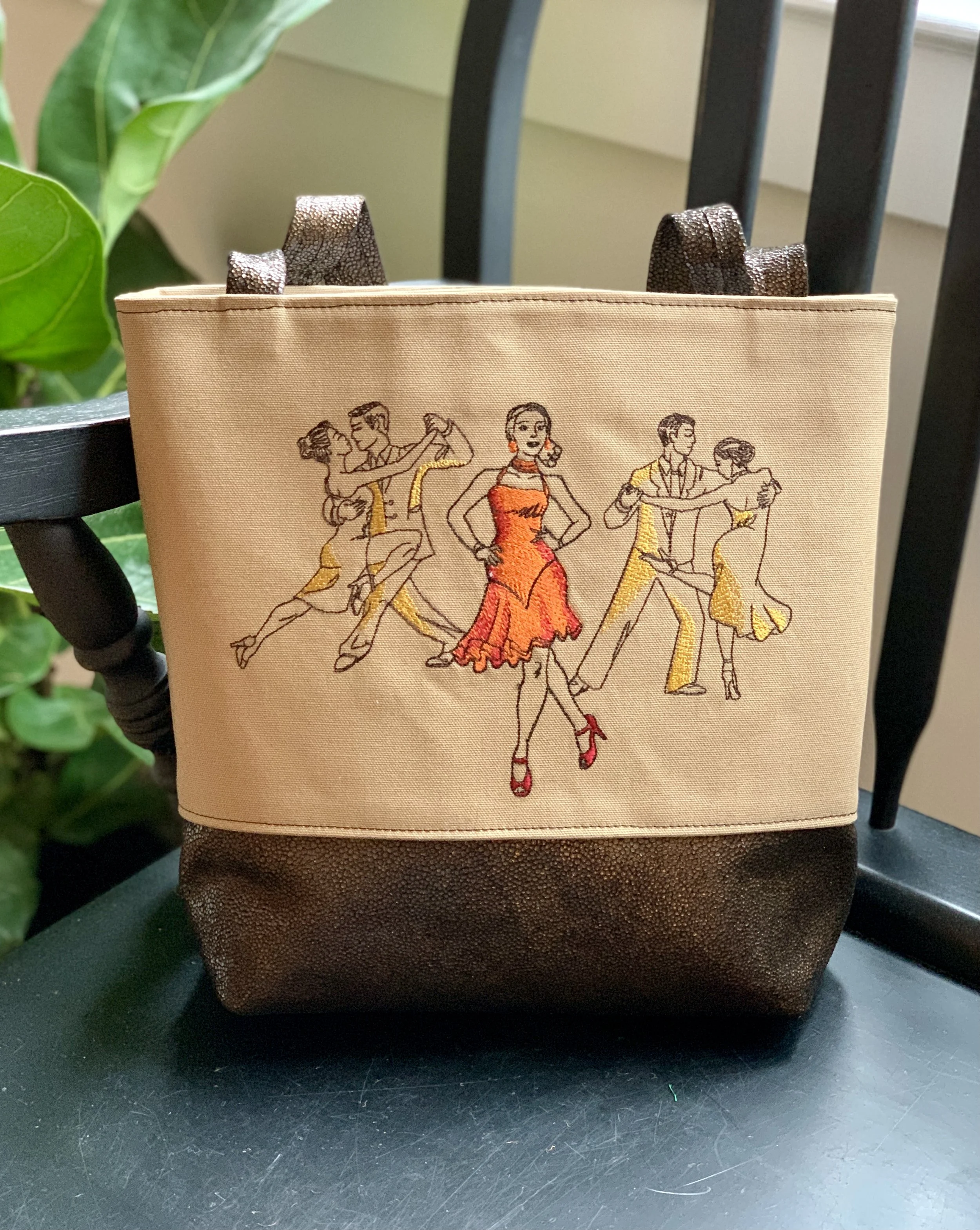
Dance tote with an embroidered front panel and leather trim, a beautiful and functional choice for a ballroom dancer
Design choices from a dancer’s perspective
Size: Big enough for heels and flats, but small enough to carry around town. Consider extra depth to protect 2–3” heels.
Material: A combination of durable canvas or leather exterior with a soft interior protects shoes and looks smart.
Closure: Zippers or snaps for glove-friendly access, plus handy pockets for quick grabs.
How I designed bags for the ballroom community
As a ballroom dancer, I built these bags because I wanted something that met our real needs — not an afterthought from a general sports bag. The design started with the shoe: reinforced, padded space for heels and standard dance shoes, vented to keep suede breathing. A structured, supportive base prevents collapse, and the interior layout keeps practice tape, dance socks, and emergency supplies accessible without digging.
I also added a zippered pocket or quick items — ID, keys, or a phone — and made the bag easy to carry between car, studio, and venue. The materials are sturdy enough for daily use but maintain an elegant look that fits ballroom events. Colorways are bold yet tasteful, reflecting the flair of the dance floor without being gimmicky.
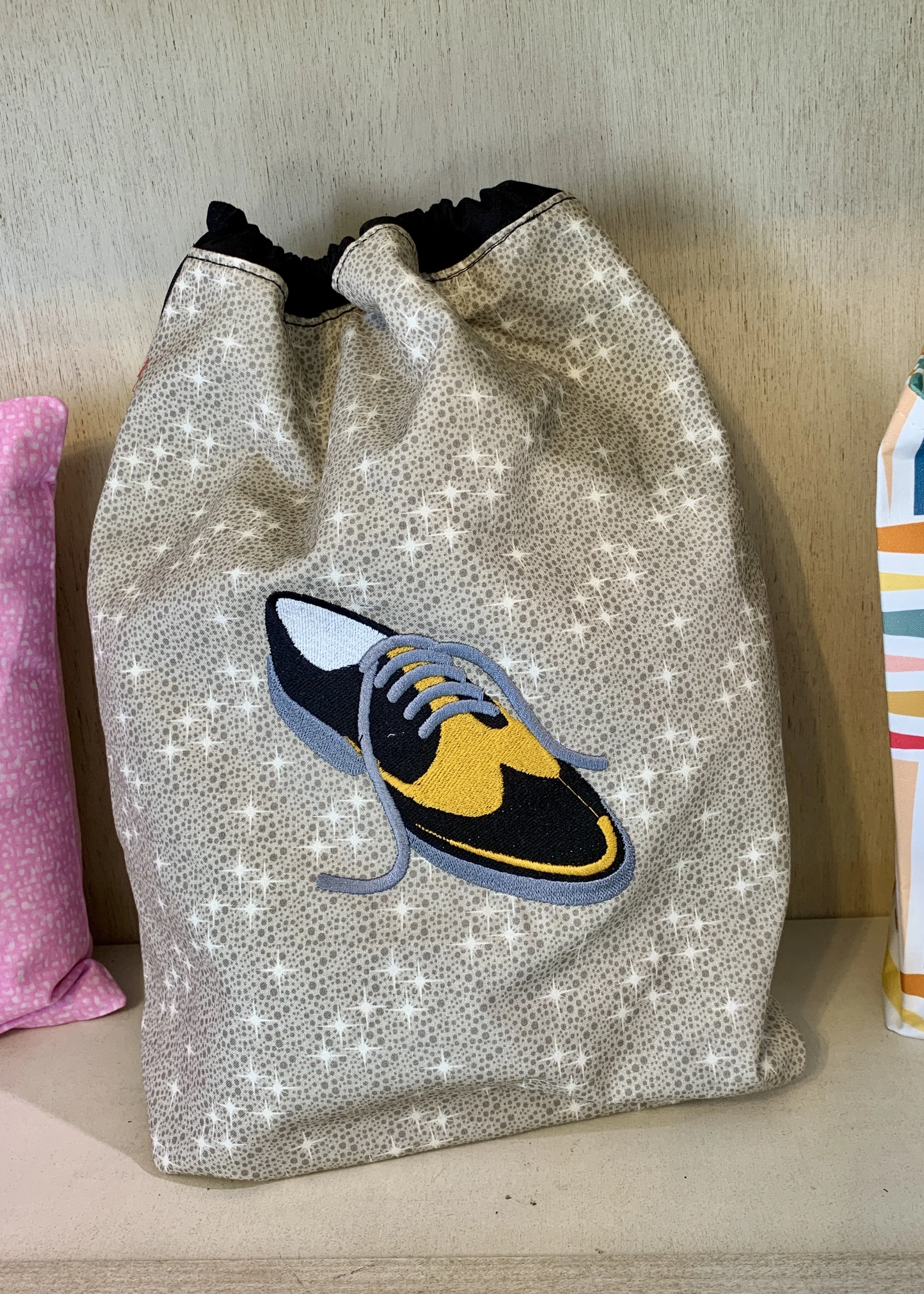
Gentlemen need shoe bags too! This soft cotton bag has a drawstring closure, inside zip pocket, and an embroidered design just for him.
Practical tips for using a dance bag
Keep shoes in their designated compartment when not in use to avoid accidental outdoor wear.
Let shoes air out before closing the bag; use shoe-safe deodorizer or cedar inserts for moisture and odor control.
Spot clean stains with a damp cloth and mild detergent; air dry before re-using the bag.
Why the bag matters
A great dance bag protects an investment — both the cost of shoes and the feel and performance they provide. It streamlines your routine, reduces stress on competition day, and keeps you looking put-together and organized. For ballroom dancers who travel between lessons, socials, and competitions, a bag designed with our needs in mind makes the everyday logistics feel a lot more graceful.
If you care about the longevity of your shoes and want a bag that reflects your style on and off the floor, choose one built with dancers in mind: structured, ventilated, and elegant enough to carry proudly to every class and competition. Wear your shoes with care — and carry them boldly.